
Sterile Technique for Every Piercing Location
Body piercing in Tyler for clients seeking ear, facial, and body placements with anatomy-appropriate jewelry selection
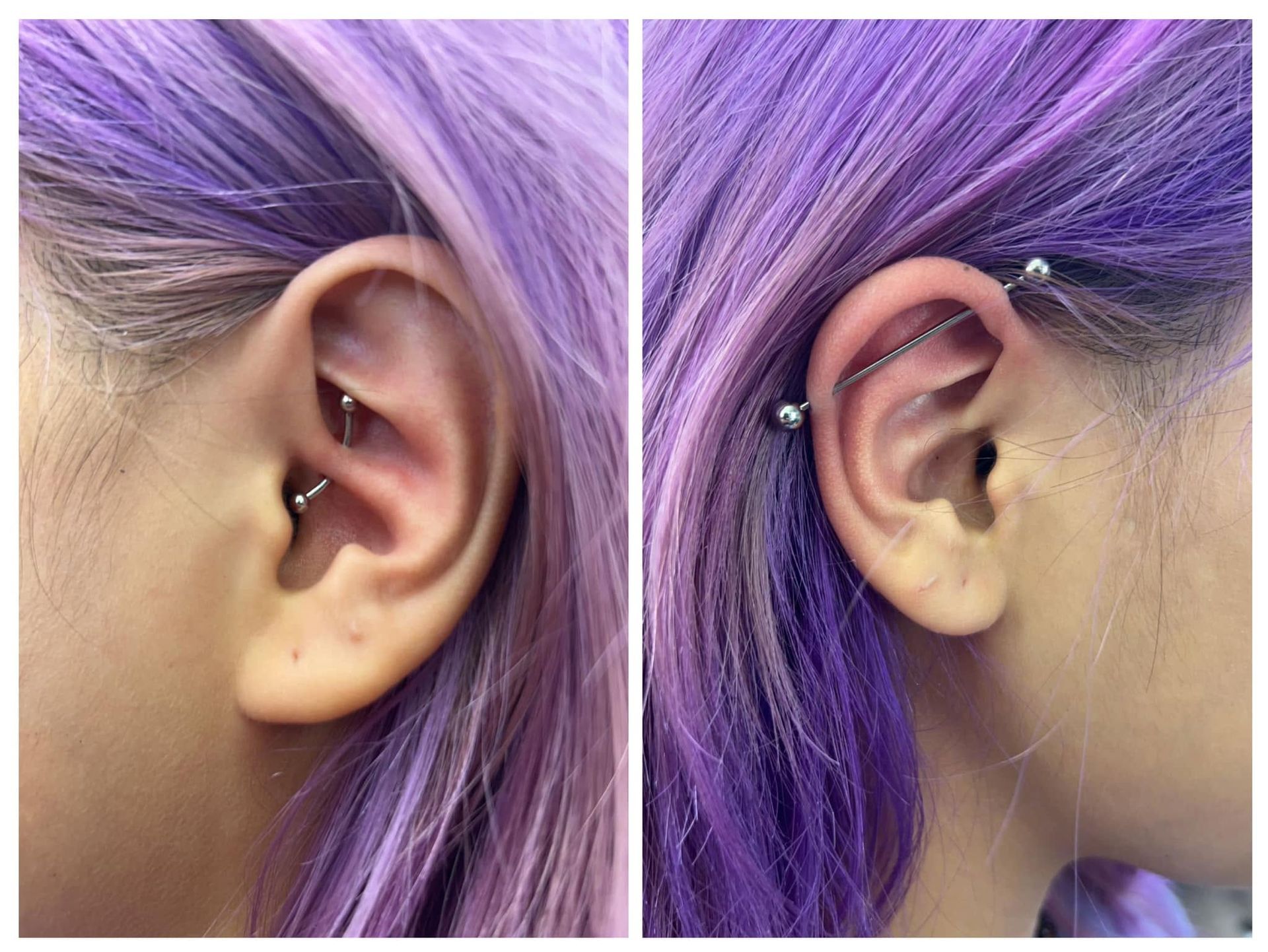
Anatomical variation between clients affects where a piercing can safely be placed and which jewelry gauge and style will support proper healing—factors that become immediately apparent when piercing is performed by someone who evaluates each client's anatomy before marking placement. Phat Panda Tattoo Studio performs professional body piercing in Tyler using hollow-core needle technique under sterile conditions, with jewelry selected based on the specific location being pierced and the anatomical characteristics of that client's body. That combination of technique and individualized assessment applies across ear, facial, and body piercing placements.
Hollow-core needles create a clean channel through tissue rather than displacing it, which is the primary mechanical reason needle piercing heals more predictably than gun-based methods. Each piercing session at Phat Panda follows a sterile setup protocol: single-use needles, sterilized equipment, and jewelry that has been autoclave-processed before placement. Jewelry selection is not a cosmetic-only decision—the gauge, material, and shape of the initial piece directly affect how the piercing heals and how long the healing timeline runs for that specific location.
Stop by Phat Panda Tattoo Studio or call (903) 752-9156 to ask about available piercing appointments and jewelry options for your specific location of interest.
Beyond Boundaries
How Piercing Jewelry and Placement Are Evaluated
Different piercing locations carry different healing timelines, movement exposure, and infection risk profiles, which is why jewelry selection varies significantly between, for example, a nostril piercing and a navel or cartilage placement. Implant-grade materials—typically titanium, surgical steel, or niobium—are used for initial jewelry because they minimize reactive tissue response during the open healing phase. Decorative or low-grade metal jewelry is appropriate only after a piercing is fully healed, and swapping to it prematurely is one of the most common reasons piercing sites become irritated or fail to close properly.
After a piercing session at Phat Panda, clients leave with written aftercare instructions specific to their piercing location and jewelry type. The piercing site itself will be clean, marked with a properly gauged piece of starter jewelry, and positioned based on the anatomical evaluation done before the needle pass. Clients can assess healing progress by checking for consistent reduction in swelling and tenderness over the first several weeks, with full healing typically taking significantly longer for cartilage placements than for soft tissue locations.
East Texas humidity and heat during summer months are worth factoring into aftercare planning, since sweat and environmental exposure around fresh piercings can introduce irritants that extend healing timelines if the site isn't kept clean. Clients with active outdoor lifestyles—hunting, farming, or frequent swimming—should discuss placement timing and aftercare adjustments with the piercer before the session to plan around those exposure factors. Not all piercing locations are equally manageable under those conditions, and a brief conversation upfront can prevent avoidable healing complications.
What Piercing Clients Usually Ask First
Piercing questions in the Tyler area range from basic process details to location-specific healing considerations, and getting clear answers before an appointment helps clients prepare properly.
What is the difference between needle piercing and gun piercing?
Hollow-core needles remove a small amount of tissue to create a clean channel, while piercing guns force blunt jewelry through tissue by displacement—needle piercing results in a cleaner wound that heals more consistently with less tissue trauma.
How long does a cartilage piercing take to heal compared to a lobe piercing?
Soft tissue ear lobe piercings typically heal within six to eight weeks, while cartilage placements can take anywhere from six months to over a year to fully heal due to the reduced blood supply to cartilage tissue.
Why does initial jewelry material matter so much for healing?
Lower-grade metals contain alloys that can cause reactive tissue response during healing, prolonging irritation and increasing the chance the piercing site rejects or develops raised scar tissue around the entry point.
How should I care for a fresh piercing during Tyler's summer heat?
Rinse the piercing site with sterile saline solution after sweating or outdoor activity, avoid submerging in lakes, pools, or rivers until the site is fully healed, and keep the area dry between cleanings to reduce irritant buildup.
When can I change my initial jewelry to a different style?
Jewelry changes should wait until the piercing is fully healed—not just comfortable—and the timeline for that depends entirely on the location, your body's healing response, and how consistently aftercare was maintained.
Phat Panda Tattoo Studio handles body piercing with the same standards applied to tattoo work—sterile technique, anatomy-specific planning, and quality materials from the first appointment forward—call (903) 752-9156 to ask about scheduling and available jewelry options.