
Line Work and Shading Built to Last
Traditional and black and gray tattoos in Tyler for clients seeking timeless monochromatic work across varied skin tones
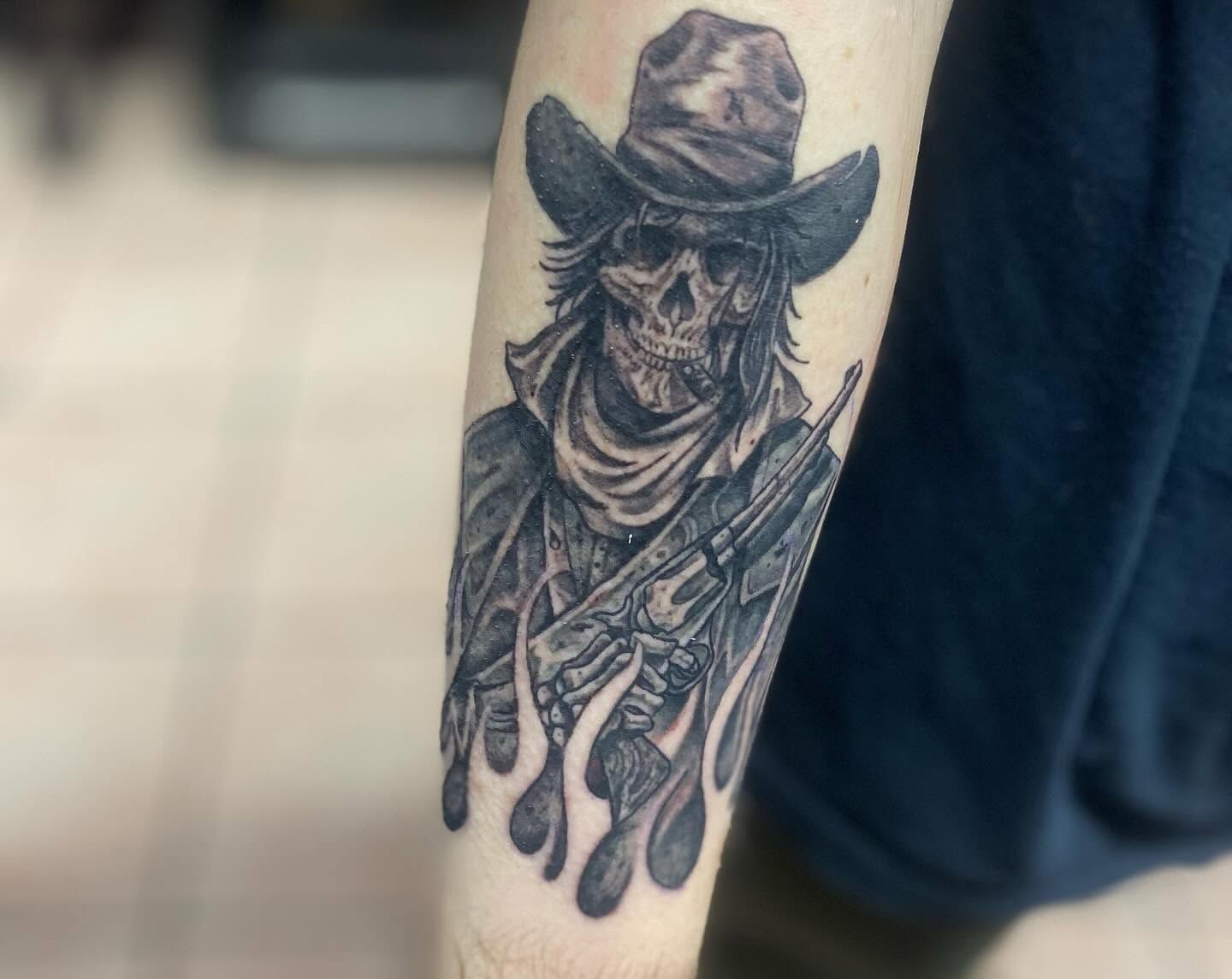
Grayscale tattoo work done without precise shading technique loses contrast within years, leaving flat, washed-out pieces that no longer read the way they were designed. Phat Panda Tattoo Studio executes traditional and black and gray tattoo work using single-needle and multi-needle shading methods that build genuine tonal range into the skin rather than relying on a single ink density. In Tyler and across East Texas, black and gray remains one of the most requested styles precisely because it holds well across a wide range of skin tones and ages without the fading concerns associated with heavily saturated color palettes.
Traditional tattoo technique prioritizes bold outlines, defined line weight, and deliberate contrast between dark and light areas. Black and gray work extends that foundation by using diluted ink washes to create smooth gradient transitions between shaded zones. Artists at Phat Panda control needle depth, ink dilution ratio, and pass count to achieve the specific tonal value needed at each part of a composition—a process that requires consistent hand pressure and an understanding of how pigment heals differently in packed areas versus lighter wash sections.
Schedule a session review at Phat Panda Tattoo Studio to discuss your reference imagery and determine which shading approach suits your design and skin type.
Beyond Boundaries
What Proper Black and Gray Execution Requires
Achieving lasting contrast in black and gray work depends on how layers of ink are built up during the tattooing process. Artists must account for the fact that healed ink always appears lighter than fresh ink, which means saturation decisions during the session need to anticipate that shift. Packing too light leaves pieces looking washed out once healed; packing too heavy in highlight areas removes the tonal variation that makes black and gray work visually effective.
After healing, a well-executed black and gray piece shows clean separation between the darkest packed areas and the softest gray wash transitions, with highlight zones that retain their contrast against surrounding skin. Lines remain crisp rather than spreading, and the overall composition retains depth rather than flattening into a single gray tone. Clients can visually evaluate the quality of healed work by checking whether the tonal range from black through midtones to skin-tone highlights is still clearly distinguishable.
Traditional and black and gray pieces vary in complexity from single-subject designs to full sleeve compositions. Portrait work, wildlife imagery, and script-heavy pieces each present different shading challenges and may require more session time to execute correctly. Touch-up availability is also worth discussing before a session, since some skin types require additional passes on specific areas to achieve the intended saturation level after healing.
What Clients Typically Ask About This Style
Questions about black and gray tattooing often center on longevity, skin compatibility, and what separates quality execution from work that fades unevenly over time.
Why does black and gray work well across different skin tones?
Monochromatic shading relies on contrast between ink and skin rather than color hue, which means the technique adapts more consistently across darker and lighter skin tones compared to color-heavy palettes.
How does single-needle technique differ from standard shading?
Single-needle work uses a lone needle point to create fine detail, tight lines, and subtle gradients that multi-needle configurations cannot replicate at small scale, making it the preferred method for intricate portrait and illustrative work.
What causes black and gray tattoos to fade or blur over time?
Sun exposure, skin elasticity changes, and original needle depth all contribute to how a piece ages—work placed too shallow fades quickly, while work placed too deep spreads as skin shifts over years.
How do I know if my design is suited to black and gray versus color?
Designs with strong compositional contrast, defined subject-to-background separation, and clear line structure translate well to black and gray, while pieces that rely on hue differentiation to separate elements may need color to read correctly.
When should I schedule a touch-up for a healed black and gray tattoo in Tyler?
Most artists recommend waiting a minimum of four to six weeks after the initial session before evaluating healed results, since ink settles and lightens during that period before the final appearance stabilizes.
Phat Panda Tattoo Studio works with clients across the Tyler area on traditional and black and gray pieces ranging from small single-session designs to complex multi-session projects—contact the studio at (903) 752-9156 to discuss your concept and available appointment times.